Solar lights and biodiversity: 5 garden tips

Categories : Eco , Exterior , New features , Techno

THE GUIRLED JOURNAL · OUTDOORS

Solar lights
and biodiversity

5 tips for better garden lighting

The table is still set, conversations linger and a string of lights illuminates the terrace. These are the moments that make evenings outdoors so enjoyable. But once everyone has gone back inside, is that lighting still needed?

With solar lights, automatic switching can make this question easy to overlook. Yet the most useful way to limit light pollution in your garden is to choose what you light, how brightly and for how long. Here is how to adapt your setup while keeping the atmosphere you love.

Understanding the link between light and biodiversity

A solar panel charges a battery during the day, and that stored energy then powers the light. This makes it easy to install lighting without a nearby socket. However, being solar-powered does not make its light harmless to wildlife.

The French Biodiversity Agency (OFB) points out that garden lighting can disorient insects and hinder the movement of some nocturnal species. For animals, what matters is the light they are exposed to, regardless of the energy used to produce it. [1]

Choosing a light is therefore just as important as how you use it. Ambient lighting used while you are outdoors can be adjusted and switched off as the evening unfolds.

01. Light the area you are using

Start with your habits. Do you eat dinner under the pergola? Focus the lighting around the table. Do you prefer reading by the large window? A lamp near your armchair will be more useful than several lights scattered at the far end of the garden.

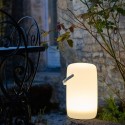
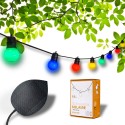
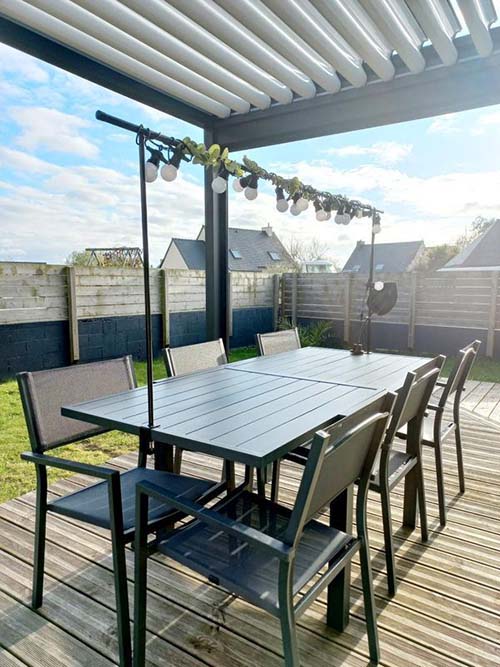
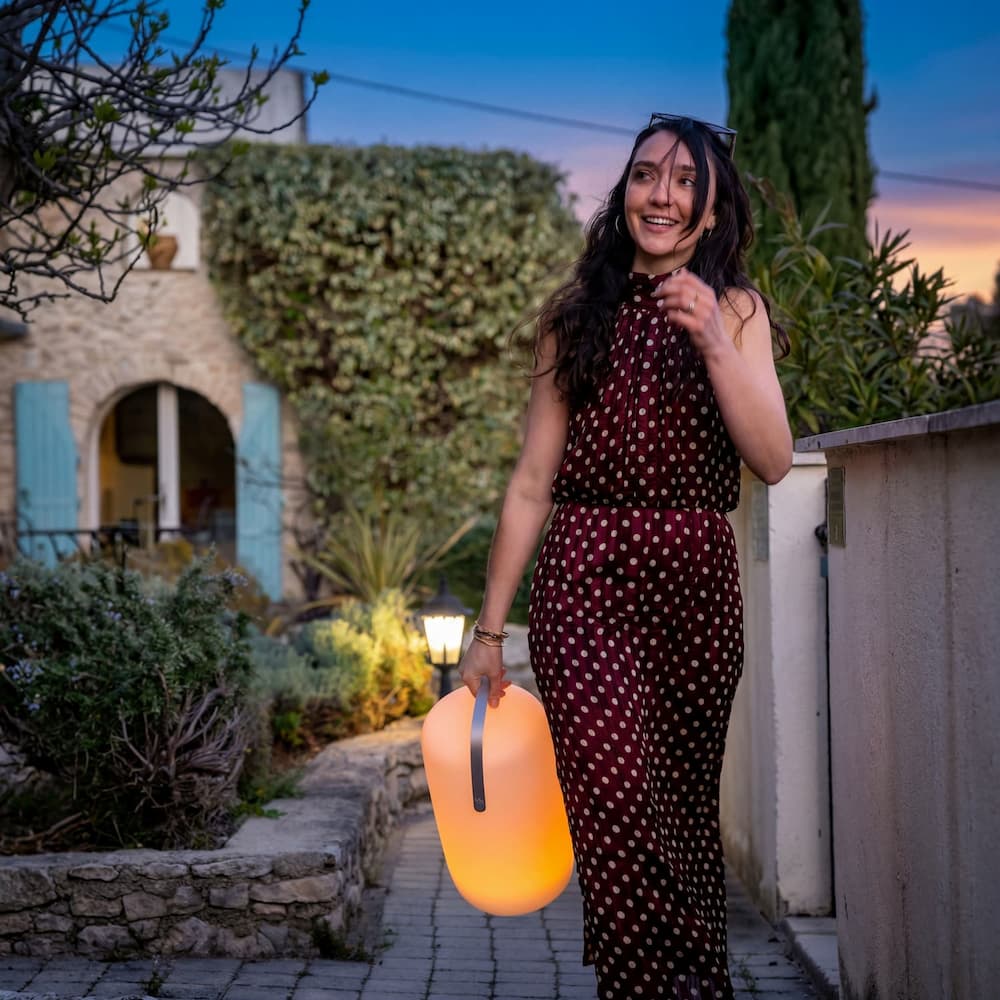
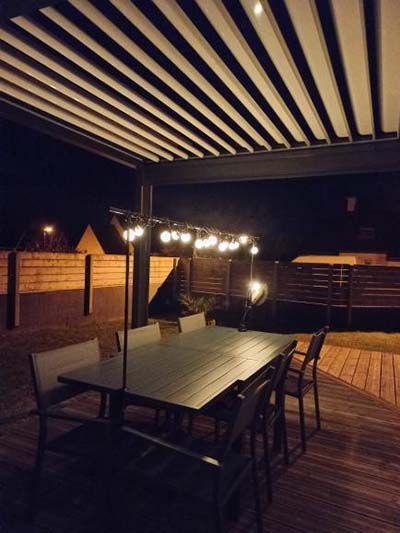
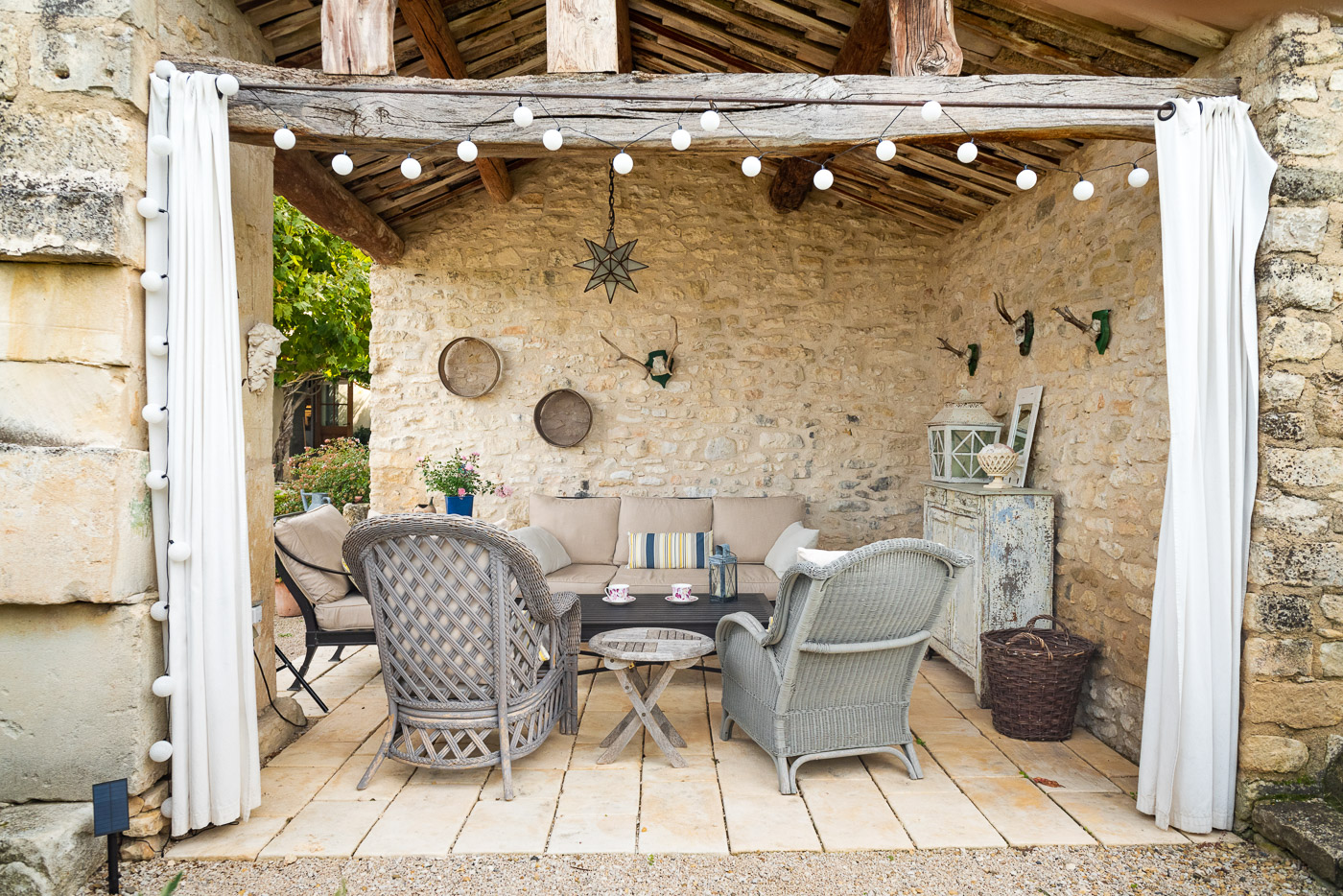
A string of festoon lights can frame the dining area, while a portable lamp can follow you when you move elsewhere. Add another light only if an area you use genuinely needs more light. This lets you create an inviting atmosphere without lighting up the entire garden.

02. Adjust the brightness from your seat

Sit down at the table, switch your lamp on at its lowest setting, then gradually increase the brightness until you can comfortably see your plate and the people around you. This is a more practical guide than always choosing the highest setting.

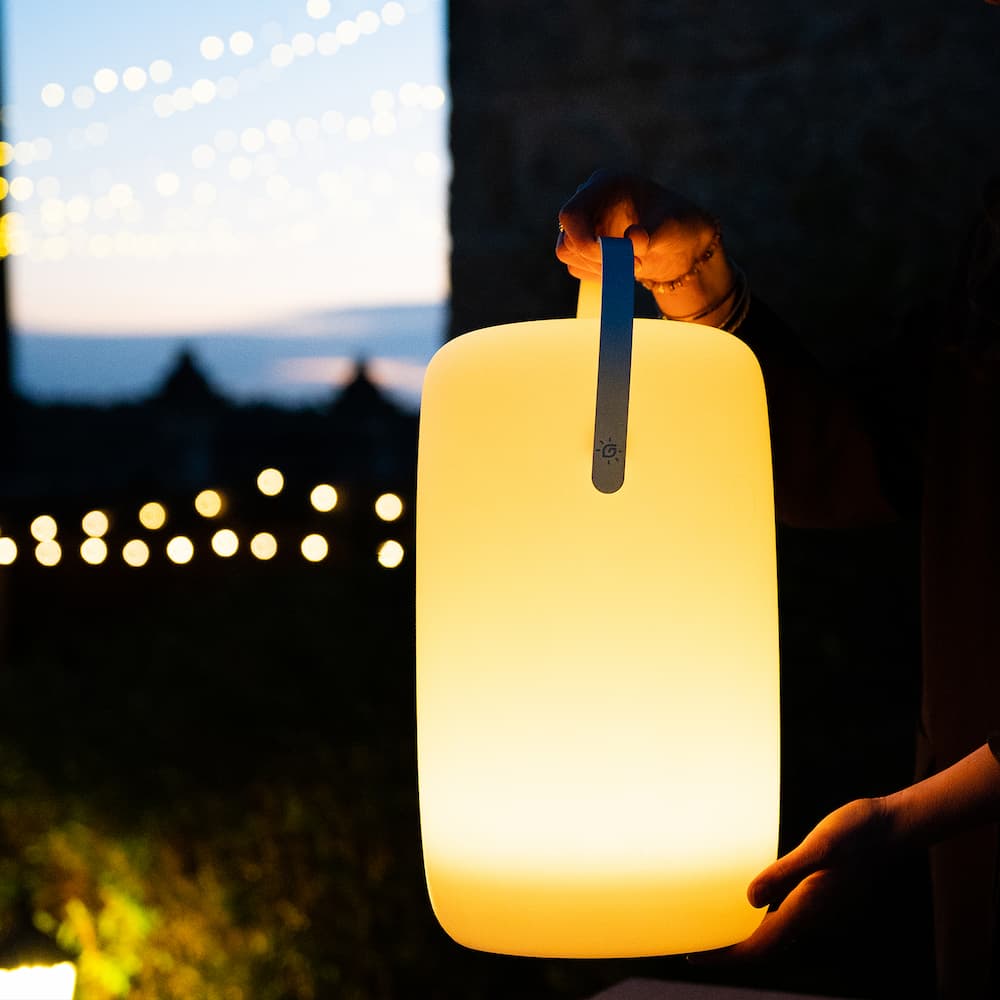
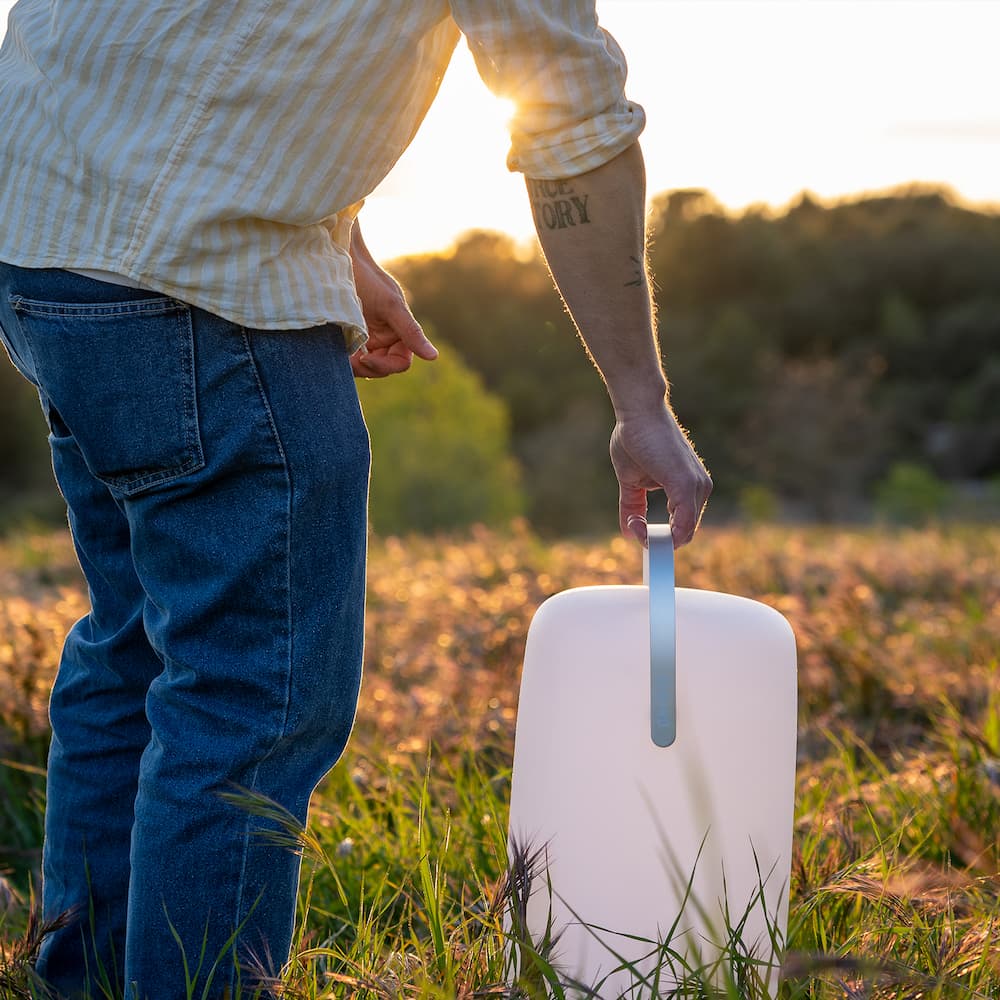
The Guirled Portable Lamp has adjustable brightness so you can match the light to the moment: brighter for a board game, softer for a chat after dinner. If a bulb dazzles you, try moving it or adjusting its height as well. Lowering the brightness does not always make up for poor placement.

03. Choose warm light

Light colour and intensity are two different settings. Here, intensity refers to the brightness level, while colour temperature, expressed in kelvin, describes a warmer or cooler shade of white.

For outdoor lighting, the OFB advises soft yellow or orange tones. The LPO also recommends limiting the blue component of lighting. If your lamp offers several shades of white, choose warm white for your evenings outdoors. [1] [2]

This choice works alongside the other measures: a warm light left on all night still illuminates the surrounding environment. Light colour does not remove the need to reduce brightness and lighting duration.

04. Keep some areas of the garden dark

Hedges, trees and the edges of a pond do not need to become a brightly lit extension of the terrace. Protect these spaces and avoid directing spotlights towards foliage or the sky. The LPO recommends focusing light towards the ground and protecting sensitive natural habitats. [2]

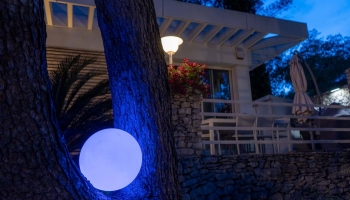
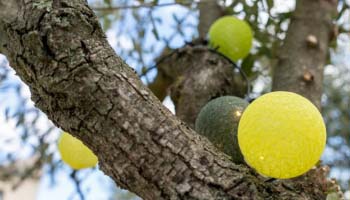
For string lights or a decorative lamp that spreads light in all directions, orientation alone is not enough. Placement, brightness and the number of lights switched on also matter. Take a few steps into the garden: if the hedge is clearly lit, move the lights closer to the area you are using or lower their brightness.

05. Plan for the end of the evening

When installing your lights, choose an easy way to switch them off: an accessible button, a remote control or a timer, if your model has one. Switch off decorative lighting when you go back inside, even if there is still energy in the battery.

Switching on at dusk indicates that it is dark; it does not necessarily mean the light detects your presence. For an entrance or a pathway, suitable lighting with a motion sensor can serve a different purpose. Check each model’s features and settings, without assuming that all solar lights work in the same way.

An example for a terrace with a pergola

For your next dinner, try this setup: a string of lights above the dining area, adjusted so you can comfortably see the table. Leave the flower beds and the far end of the garden unlit. If you move to the garden seating area afterwards, a portable lamp can go with you; switch off the string lights, which are no longer needed. Before heading inside, switch off the last lamp.

This way, you adapt the lighting to where you spend the evening, using only the lights you actually need.

Solar lights and biodiversity: your questions

1. Can you leave a solar light on all night?

Some models have enough battery life, depending on their charge and settings. For decorative lighting, however, it is better to switch it off when no one is using the outdoor space. The available battery life is not a lighting duration you need to use up.

2. Does warm light prevent all effects on animals?

No. It is one of the recommended choices, but it does not guarantee that there will be no effects. Placement, brightness and duration of use remain essential.

3. How can I tell if my garden is too brightly lit?

From your terrace, look at where the light spreads. Are trees, a hedge or unused areas being lit? You can start by reducing this spill of light. This is a practical guide for adjusting your setup, not a measure of its impact on biodiversity.


Lights for your moments outdoors

At Guirled, we love lighting that accompanies moments outdoors. To create your dining area or relaxation space, discover our solar festoon lights and the Portable Lamp with adjustable brightness. Choose their placement and settings to suit how you use your space, then remember to switch them off at the end of the evening.

Related posts

Add a comment

Your cart

There are no more items in your cart

Sign in